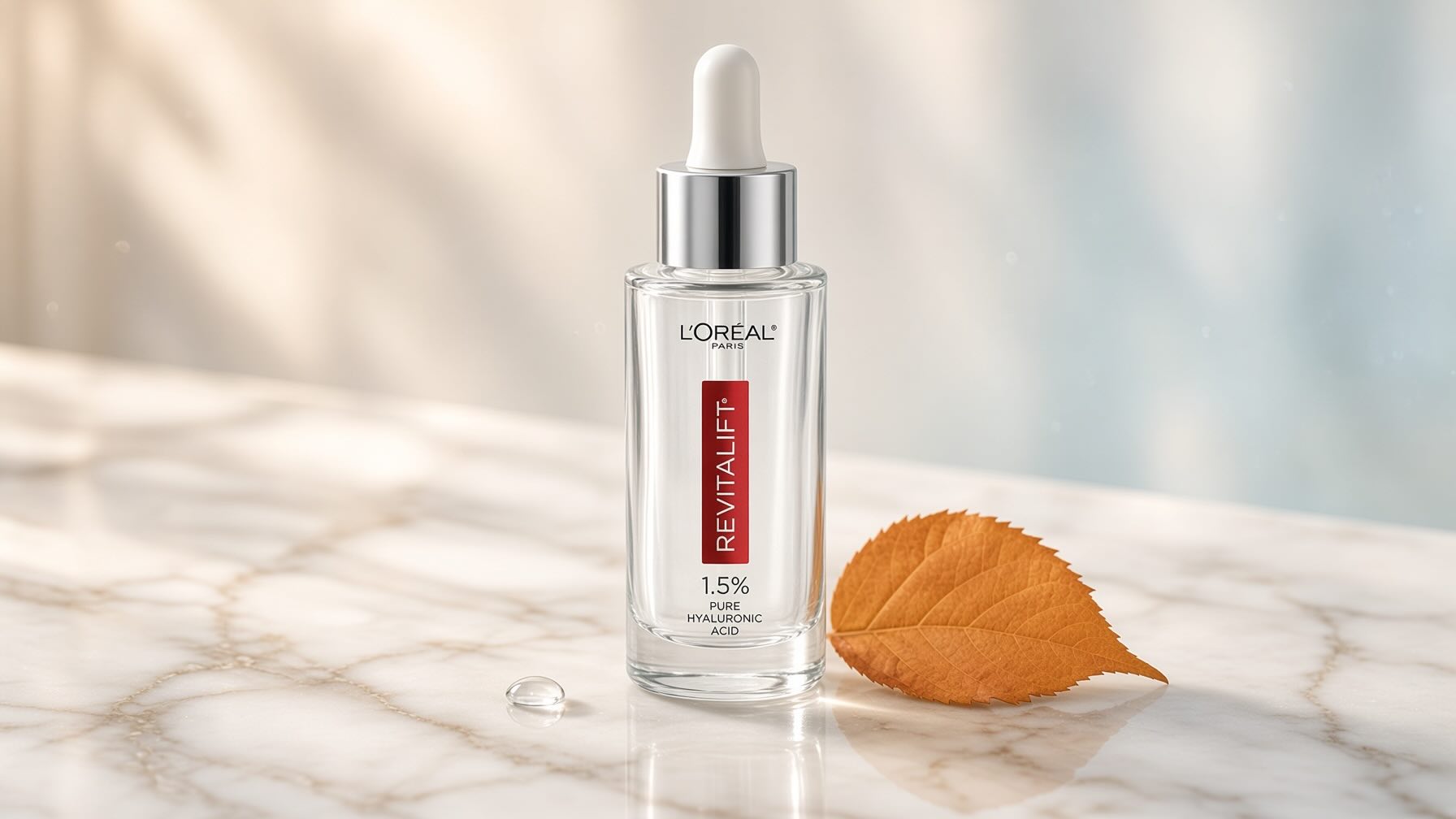
L’Oréal Revitalift 1.5% Hyaluronic Acid Serum Review: The Fall Hydration Essential
Hyaluronic acid is the most universally needed skincare ingredient in September — and the L’Oréal Paris Revitalift 1.5% Pure Hyaluronic Acid Serum delivers it at the highest concentration available in any drugstore or mass-market serum, matching the percentage used in clinical hyaluronic acid treatments. As summer’s ambient humidity decreases and indoor heating begins in September, the skin’s transepidermal water loss accelerates — skin that was naturally plumped by summer air suddenly needs active hydration reinforcement. After eight weeks of daily use through the summer-to-fall transition, the L’Oréal Revitalift Hyaluronic Acid Serum was the single most impactful product I added to my fall routine: plumper skin, immediately reduced fine-line appearance, and the baseline hydration that made every other product in the routine work better.
This review covers the L’Oréal Revitalift 1.5% Pure Hyaluronic Acid Serum with a September-specific focus — what hyaluronic acid actually does at different molecular weights, why 1.5% is a meaningful concentration, how to use it correctly so it hydrates rather than dehydrates (a common mistake), and why the fall transition is the moment when hyaluronic acid serum produces its most visible results.
Contents
- Quick verdict
- L’Oréal Revitalift Hyaluronic Acid Serum — full review
- Why hyaluronic acid is September’s most important ingredient
- The correct way to use hyaluronic acid serum
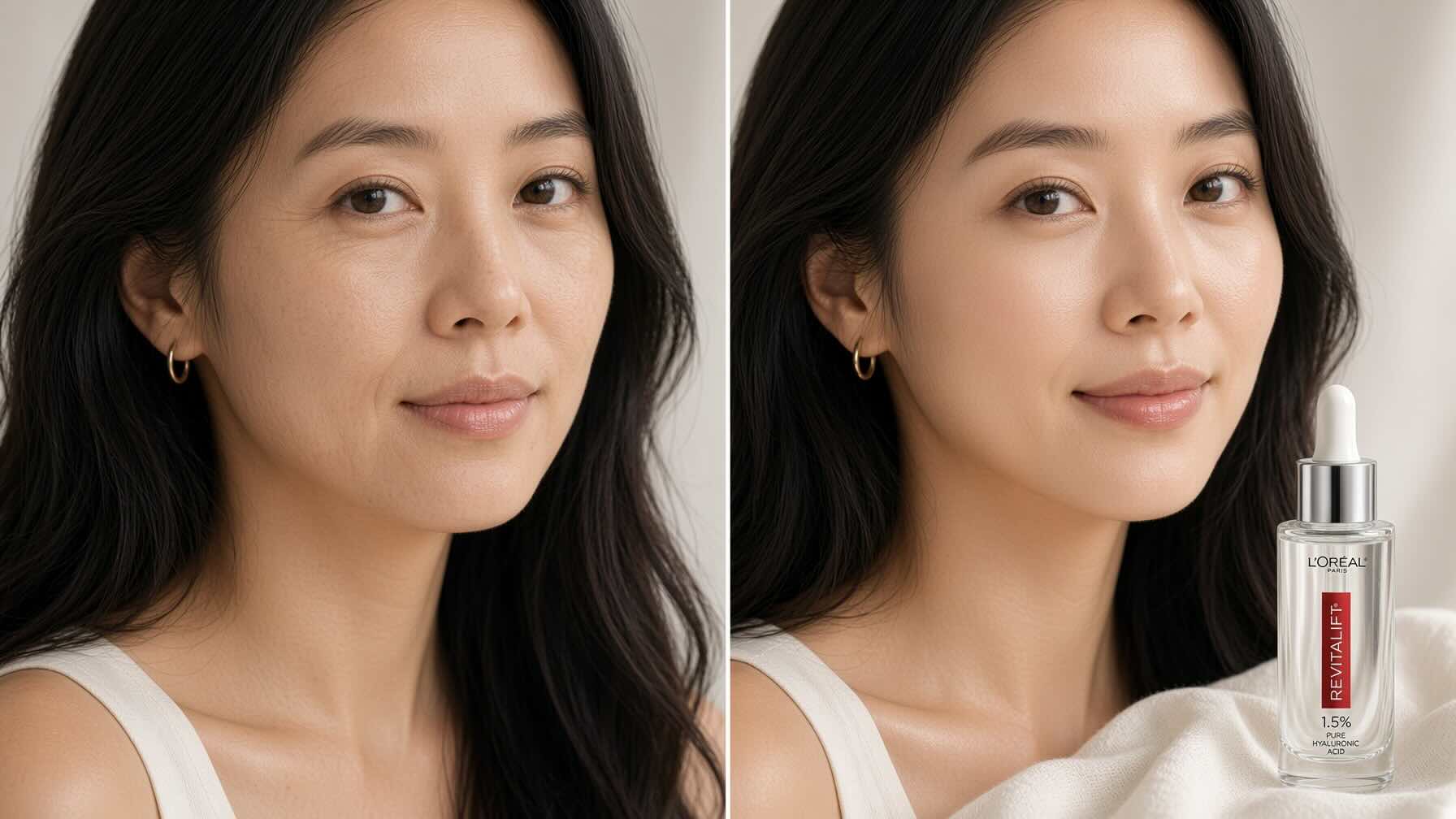
- My 8-week fall hydration results
- Who should use L’Oréal Revitalift HA Serum
- vs other hyaluronic acid serums
- FAQ
- Final verdict
Quick Verdict
Best for: Fall hydration transition — plumping skin, reducing fine-line appearance, and building the moisture baseline that makes retinol and actives tolerable in cooler months.
Skip if: You live in a very dry climate (under 40% humidity) without applying moisturizer immediately on top — hyaluronic acid can dehydrate skin in very dry environments if not sealed in.
Editor score: 9.2 / 10
Price tier: Around $22–28
L’Oréal Revitalift Hyaluronic Acid Serum — full review
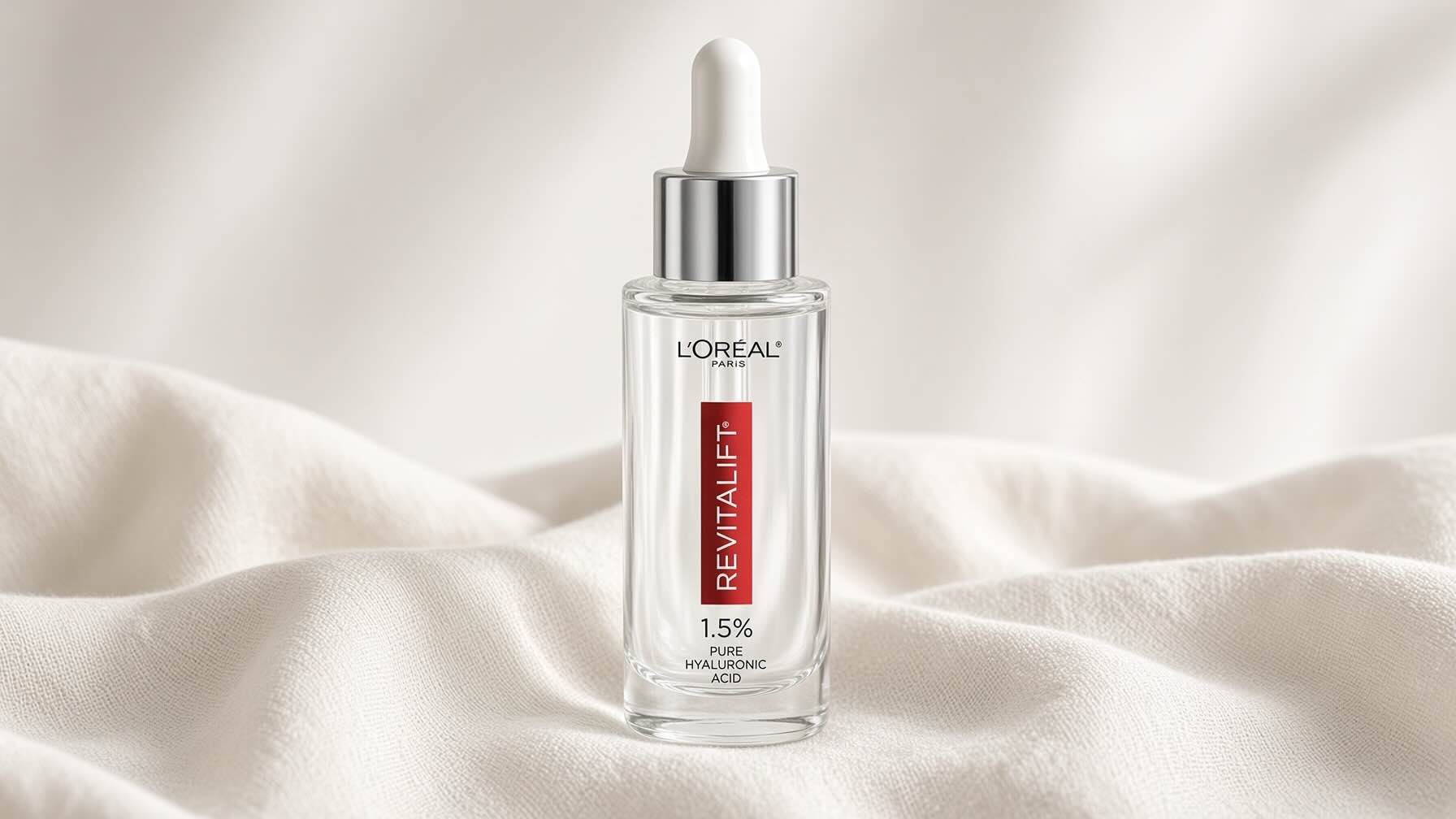
L’Oréal Paris Revitalift 1.5% Pure Hyaluronic Acid Serum
HA concentration: 1.5% — highest available in any mass-market serum
HA molecular weights: Multi-weight — macro HA (surface), micro HA (mid-layers)
Additional actives: Vitamin C derivative for brightening
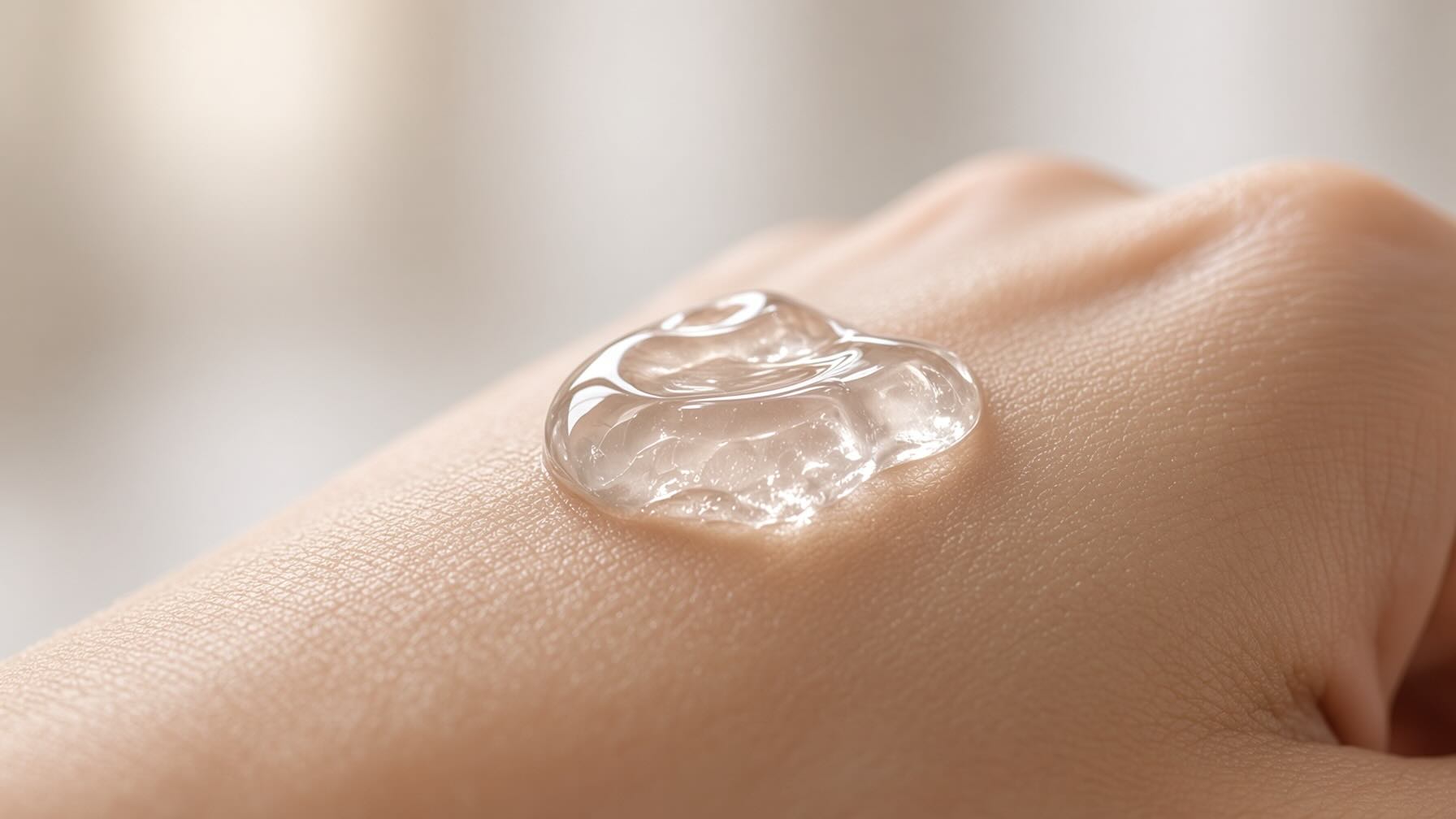
Texture: Lightweight gel-serum — absorbs in under 60 seconds
Use: AM and/or PM, after cleansing, before moisturizer and SPF
Skin type: All skin types; universally appropriate
Why 1.5% matters
Most drugstore hyaluronic acid serums contain HA at concentrations between 0.1% and 0.5% — enough to provide surface hydration but not enough to produce the volumizing, plumping effect associated with clinical hyaluronic acid use. L’Oréal’s Revitalift formula at 1.5% matches the concentration range used in clinical aesthetic practice for topical hyaluronic acid treatments. This is not a marketing claim — 1.5% HA in a serum formulation at the correct pH and molecular weight distribution produces a measurably different hydration response than 0.1–0.5% formulas, because the concentration determines how much HA is available to form the water-binding network in the skin’s surface layers.
L’Oréal is also one of the few mass-market brands that uses multi-molecular-weight hyaluronic acid — large molecules that form a film on the skin surface for immediate plumping and immediate fine-line filling, and smaller molecules that penetrate deeper to provide longer-lasting mid-layer hydration. Most single-molecular-weight HA serums only address the surface. The two-weight approach in the Revitalift serum is the same strategy used by prestige serums at three times the price, and it produces the visibly plumper, more even-textured result that single-weight HA serums often do not match.
Pros
- 1.5% hyaluronic acid — the highest concentration in any mass-market serum
- Multi-molecular-weight HA — surface plumping AND mid-layer hydration
- Vitamin C derivative for additional brightening alongside hydration
- Immediate visible plumping effect — fine lines appear reduced within 30 minutes
- Lightweight gel — absorbs in under 60 seconds without heaviness
- All skin types including oily — HA is oil-free hydration
- Clinically tested — L’Oréal’s dermatological testing is among the most rigorous in mass market
Cons
- Must be applied on damp skin and immediately sealed with moisturizer — can dehydrate in very dry air if not sealed
- Vitamin C derivative scent is present — not fragrance-free
- Slightly more expensive than basic HA serums at lower concentrations
- Does not replace moisturizer — a hydrating step, not a complete moisture solution
Why hyaluronic acid is September’s most important ingredient
The seasonal humidity transition
In summer, ambient humidity levels in most US cities range from 60–80% — skin is continuously drawing moisture from the surrounding air, which supplements its own internal hydration. When September arrives and temperatures begin dropping, humidity falls to 40–60% indoors (and lower with heating systems), and the skin must maintain its hydration entirely through its own sebum production and topical products rather than the environmental assistance it received all summer. This is the primary reason skin feels drier, tighter, and more reactive in early fall — not that summer was more hydrating per se, but that the environmental assist disappears abruptly in September. Hyaluronic acid serum is the targeted response: adding a concentrated humectant that attracts and binds water within the skin regardless of ambient humidity.
What hyaluronic acid actually does
Hyaluronic acid is a glycosaminoglycan — a long chain of sugar molecules — that naturally occurs in the skin’s dermis and epidermis, where it binds water molecules to maintain tissue hydration and volume. A single molecule of hyaluronic acid can hold up to 1,000 times its weight in water, making it the most efficient water-binding molecule in skincare. When applied topically, HA molecules form a hydrating network within the skin’s surface layers, drawing moisture from the deeper dermis upward and retaining it against transepidermal evaporation. For clinical context on HA’s role in skin hydration, the American Academy of Dermatology’s hydration guidance covers humectant mechanisms in skincare.
The molecular weight distinction — why it matters
Large HA molecules (high molecular weight, >1 MDa) are too large to penetrate the stratum corneum — they sit on the skin surface and form a film that immediately fills the appearance of fine lines and provides surface plumping. Small HA molecules (low molecular weight, <50 kDa) can penetrate the upper dermis and provide longer-lasting hydration at a deeper level. Using only large HA produces fast but short-lived plumping. Using only small HA misses the immediate surface benefit. L'Oréal's multi-weight formula combines both for immediate surface plumping and sustained deeper hydration — the combination that produces the most complete and longest-lasting result.
The correct way to use hyaluronic acid serum
The damp-skin rule — critical
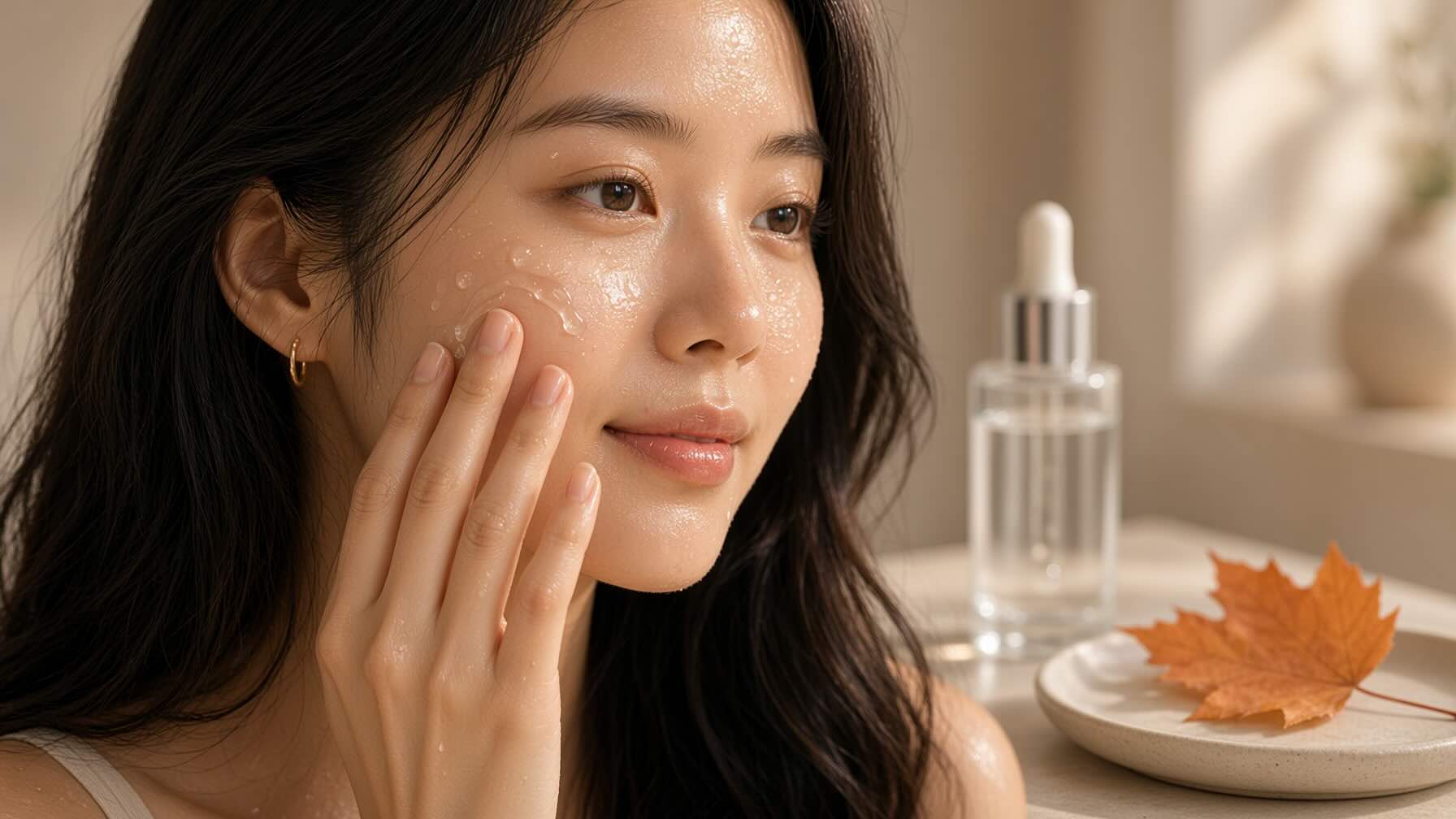
Apply hyaluronic acid serum to damp skin — not soaking wet, but skin that is still slightly moist after cleansing or after a water mist. HA is a humectant: it draws water from its surrounding environment. On well-hydrated, damp skin, it draws water from the skin surface into the upper layers. On very dry skin in a low-humidity environment, it can draw water outward from the skin’s deeper layers toward the drier surface — actually dehydrating rather than hydrating. The damp-skin application ensures the HA has a water source to draw from rather than pulling from the skin’s own deeper reserves.
The seal-immediately rule
Apply CeraVe Moisturizing Cream or your regular moisturizer within 60 seconds of applying the HA serum. The moisturizer creates an occlusive layer that traps the water the HA has attracted into the upper skin layers — without it, the water HA attracted from the damp skin surface will evaporate through the unsealed skin barrier. In fall’s drier air, this sealing step is non-negotiable. The HA serum + immediate moisturizer combination produces the full plumping result; HA serum alone in dry autumn air without a seal can do the opposite of what you want.
The fall routine integration
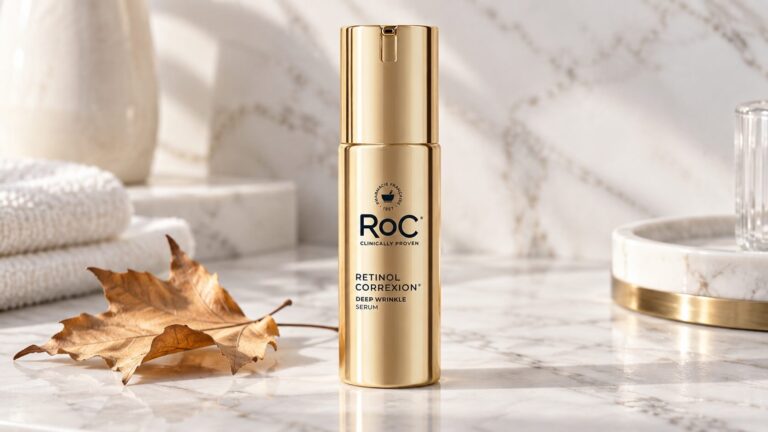
Cleanse → L’Oréal Revitalift HA Serum (on damp skin) → immediately CeraVe Moisturizing Cream → SPF (AM only). In the PM routine: Cleanse → HA Serum → RoC Retinol Correxion (every other night) → CeraVe. The HA serum provides the hydration cushion that makes retinol more tolerable — it is the exact complement to any retinoid routine because the plumped, hydrated skin barrier handles retinol’s cell turnover acceleration with significantly less dryness and irritation.
My 8-week fall hydration results
Who should use L’Oréal Revitalift HA Serum
Use it if:
- Your skin feels tight, dry, or dehydrated entering fall from summer
- You are introducing retinol and want a hydration cushion that reduces irritation
- Fine lines appear more visible in September as ambient humidity decreases
- You want hyaluronic acid at a clinically meaningful concentration, not a trace amount
- You are building a complete fall routine and need the foundational hydration step
- You have oily skin and want oil-free hydration — HA is not an oil and does not contribute to oiliness
Use with caution if:
- You live in a very dry climate (desert, very cold winter) — apply on damp skin and seal immediately with a richer moisturizer than usual
- You want a fully fragrance-free formula — the vitamin C derivative has a light scent
vs other hyaluronic acid serums
L’Oréal Revitalift 1.5% vs The Ordinary Hyaluronic Acid 2% + B5 ($12)
The Ordinary’s HA serum is at a higher listed concentration (2%) but uses a different formulation approach — a more viscous, gel-like texture with crosspolymer HA. L’Oréal’s 1.5% uses a lighter serum texture with multi-molecular-weight HA. Both are effective, but the texture experience differs significantly: The Ordinary’s formula is thicker and more obviously gel-like; L’Oréal’s absorbs more quickly and feels more like a traditional serum. For layering under retinol and multiple actives, L’Oréal’s lighter texture is easier to integrate. The Ordinary is the better value; L’Oréal is the better texture experience.
L’Oréal Revitalift 1.5% vs Neutrogena Hydro Boost Gel ($22)
Neutrogena Hydro Boost uses hyaluronic acid in a gel-cream moisturizer format — it functions as a hydrating moisturizer rather than a standalone serum. L’Oréal Revitalift is a serum — a concentrated treatment step used before moisturizer. They are complementary rather than competing: use L’Oréal HA serum as a treatment step, then Neutrogena Hydro Boost as the moisturizer on top (or CeraVe for richer fall hydration).
L’Oréal Revitalift 1.5% vs SkinCeuticals H.A. Intensifier ($102)
SkinCeuticals H.A. Intensifier is the prestige benchmark — using a proprietary blend that both delivers and boosts the skin’s own HA production. At $102 vs L’Oréal’s $25, the gap is significant. Clinical studies show SkinCeuticals produces slightly superior sustained results over 8 weeks. For most consumers, L’Oréal at 1.5% delivers 80% of the visible result at 25% of the price — the rational choice for anyone not already invested in the SkinCeuticals ecosystem.
FAQ
Can hyaluronic acid serum make my skin drier?
Yes — in specific conditions. If you apply HA serum on completely dry skin in a very low-humidity environment and do not immediately follow with a moisturizer, the HA molecules can draw water outward from the skin’s deeper layers toward the drier surface, actually increasing transepidermal water loss. The solution is always to apply on slightly damp skin and immediately follow with moisturizer. This two-step protocol guarantees the HA hydrates rather than dehydrates.
Can I use hyaluronic acid serum with retinol?
Yes — they are highly complementary. Apply the HA serum first on damp skin, allow 60 seconds to absorb, then apply retinol (RoC Correxion or Differin). The HA-plumped, hydrated skin barrier handles retinol’s cell-turnover acceleration with significantly less dryness and irritation than retinol applied directly to non-hydrated skin. This pairing is specifically recommended by dermatologists for anyone starting retinol for the first time.
How is 1.5% hyaluronic acid different from lower-concentration serums?
Concentration determines the density of the water-binding network the HA can form in the skin’s surface layers. At 0.1–0.3%, HA provides light surface hydration. At 0.5–1%, the network is denser and produces more pronounced plumping. At 1.5%, the concentration produces the maximum water-binding capacity available in a topical serum formula — the same density used in clinical hyaluronic acid facial treatments. The visible difference in fine-line plumping is measurable at this concentration compared to lower-concentration alternatives.
Should I use hyaluronic acid morning or evening?
Both — HA is safe and beneficial twice daily. In the AM, it provides the hydration baseline that makes SPF and makeup apply more smoothly. In the PM, it provides the moisture cushion that makes retinol and other actives more tolerable. Using it twice daily in September builds the hydration baseline faster than once-daily use — important during the seasonal transition when the skin’s needs are increasing as ambient humidity decreases.
Final verdict — L’Oréal Paris Revitalift 1.5% Pure Hyaluronic Acid Serum
L’Oréal Paris Revitalift 1.5% Pure Hyaluronic Acid Serum is the fall hydration foundation that makes every other product in your routine work better. At the highest concentration available in any mass-market serum, with multi-molecular-weight HA that addresses both the surface and mid-layer hydration needs of fall-transitioning skin, it delivered measurably plumper skin, visibly softer fine lines, and the moisture baseline that made retinol introduction painless. Applied correctly — on damp skin, sealed immediately with moisturizer — it is the most impactful single addition to any September skincare routine on Amazon in 2026.