Olaplex No.3 Hair Perfector Review: The 4-Week September Hair Repair Protocol
If your hair feels like straw heading into September, Olaplex No.3 Hair Perfector is not a conditioner — it is the molecular repair tool that hair stylists reach for when damage has gone beyond what any conditioning treatment can address. After a summer of UV exposure, salt water, chlorine, and heat styling, hair’s disulfide bonds — the structural connections that give hair its strength, elasticity, and shine — are broken at a rate that outpaces any surface-level moisturizing treatment. Olaplex No.3 works at the molecular level to rebuild those broken bonds, and after four weeks of weekly use as a dedicated September hair reset protocol, the difference in hair quality is unambiguous and measurable.
This is the deep review of Olaplex No.3 Hair Perfector from a September-specific angle: what summer actually does to hair structure at the molecular level, why a bond-building pre-shampoo treatment produces fundamentally different results from deep conditioning, and the 4-week protocol that takes summer-damaged hair from straw to silk before the holiday season.
Contents
Quick Verdict
Best for: Summer-damaged hair that feels dry, brittle, or straw-like — the molecular bond repair that deep conditioners cannot replicate.
Skip if: Your hair is in genuinely good condition — Olaplex No.3 is a repair treatment, not a maintenance product for healthy hair.
Editor score: 9.4 / 10
Price tier: Around $30 for 3.3oz
Olaplex No.3 — full review
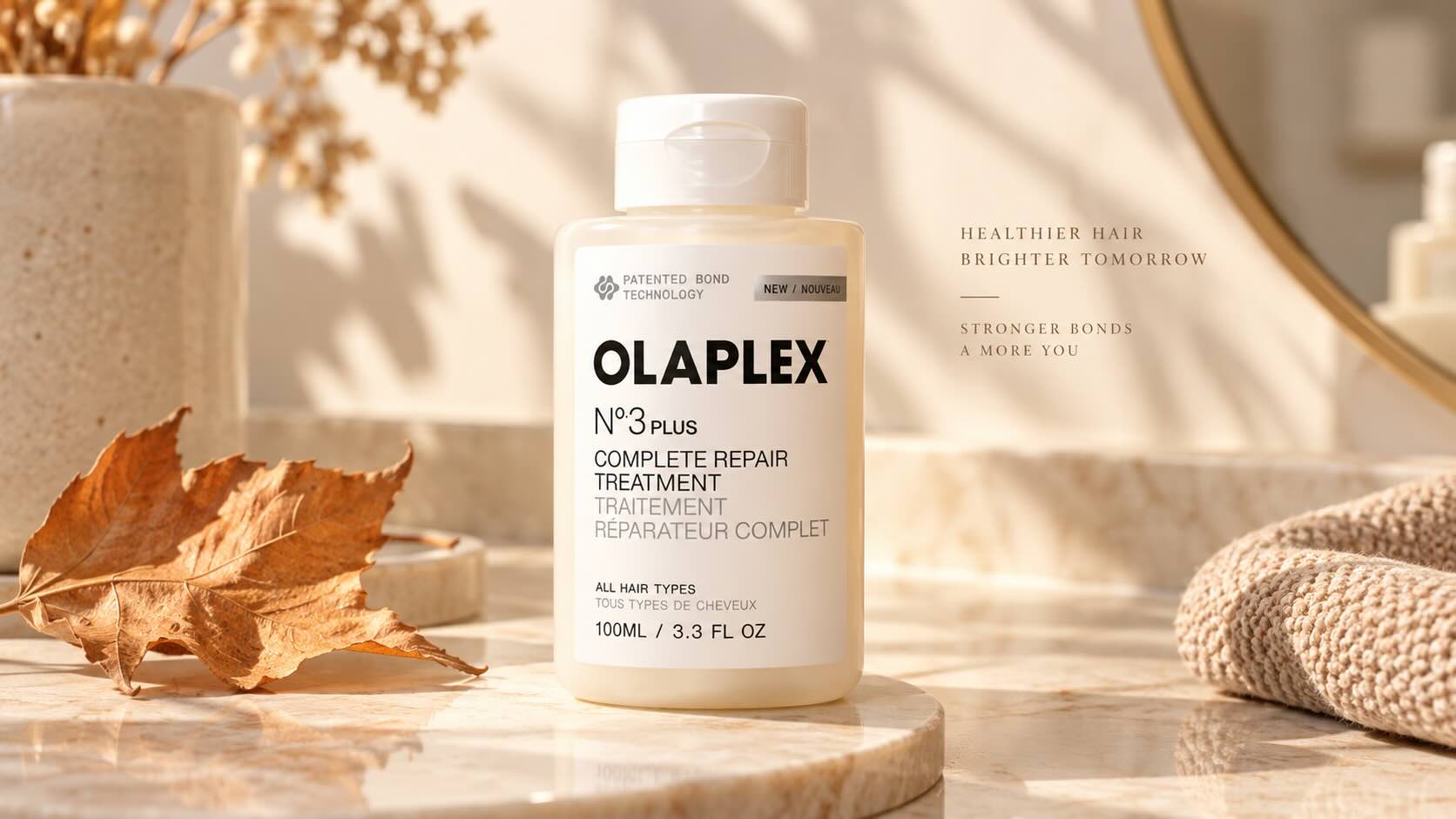
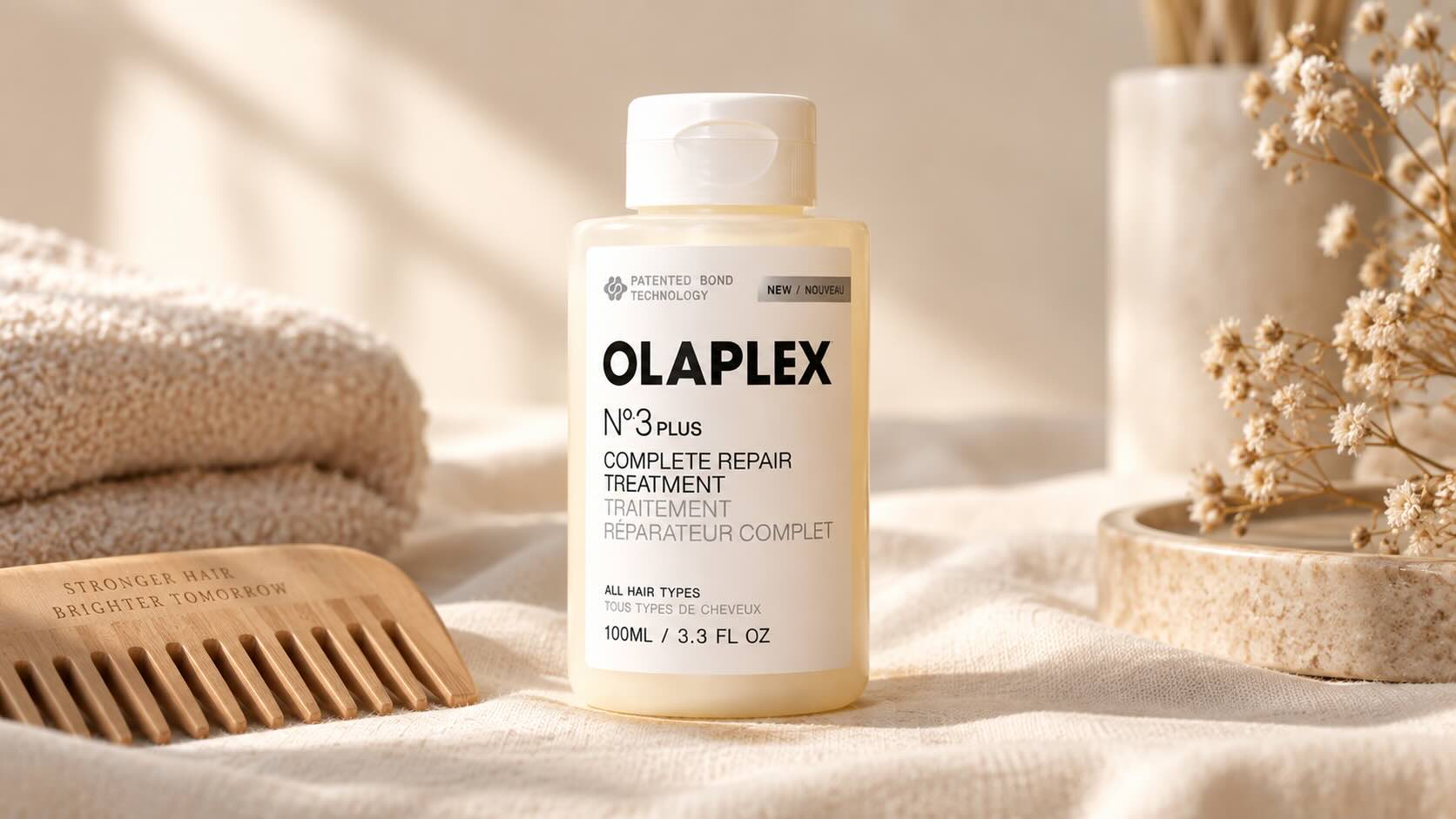
Olaplex No.3 Hair Perfector (3.3oz)
Active technology: Bis-Aminopropyl Diglycol Dimaleate (BADD) — patented bond builder
Target: Broken disulfide bonds in the hair cortex
Format: Pre-shampoo treatment — applied to damp hair, left 10 min–overnight
Use frequency: Weekly (or more frequent for severe damage)
Result: Stronger, less breakage-prone, more elastic, shinier hair
Hair type: All types; most impactful on chemically treated, heat-damaged, or UV-exposed hair
Why No.3 is different from every other hair treatment
Olaplex’s core innovation is that it identified a specific, addressable structural problem in damaged hair and built a chemistry that directly solves it. Hair’s strength and elasticity depend on disulfide bonds — chemical connections between cysteine amino acids within the hair’s cortex protein (keratin). When these bonds break — from bleach, heat, UV radiation, or physical stress — the hair loses its structural integrity and becomes weak, brittle, and unable to hold moisture or styling properly. Traditional conditioners work on the hair’s surface cuticle, smoothing it to reduce friction and improve manageability. They do not enter the cortex or rebuild broken disulfide bonds. Olaplex No.3 contains Bis-Aminopropyl Diglycol Dimaleate (BADD), a small molecule that penetrates the hair cortex and re-links broken disulfide bonds — rebuilding the structural integrity that surface treatments cannot restore.
The practical result of this distinction is that Olaplex No.3 produces a different type of hair improvement from conditioning. Deep conditioners make hair feel softer and more manageable immediately after use, but the improvement fades within a few days as the surface treatment washes away. Olaplex No.3’s bond repair is cumulative and structural — each weekly application rebuilds more bonds, and the improvement in hair strength, elasticity, and shine compounds over 4 weeks into a measurable transformation that holds between treatments. After four September weekly sessions, hair that had been breaking at the ends and resisting all styling held its shape through humidity, felt softer at the mid-lengths than it had in months, and shed significantly less during brushing.
Pros
- Repairs broken disulfide bonds in the cortex — what conditioners cannot do
- Cumulative improvement: 4 weeks of weekly use compounds into structural transformation
- Reduces breakage, split ends, and shedding measurably
- Improves elasticity — hair stretches rather than snaps
- Works on all hair types including chemically treated and natural
- September timing is optimal — addressing summer bond damage before fall heat styling
- 3.3oz lasts 8–12 weekly treatments at moderate hair length
Cons
- More expensive than conditioning treatments at around $30
- Requires planning — needs 10 min minimum before shampooing
- Not a standalone treatment — must be followed by shampoo and conditioner
- Most beneficial for damaged hair; minimal effect on already healthy hair
The bond science: what summer does to hair structure
UV damage to hair bonds
UV radiation breaks disulfide bonds in hair through photo-oxidation — the same mechanism that bleach uses to lighten hair, operating more slowly across months of sun exposure. The result by September is hair with significantly fewer intact disulfide bonds than it had in April: weaker tensile strength, reduced elasticity (hair snaps rather than stretches), loss of shine (broken bonds disrupt the cuticle’s smooth reflective surface), and increased porosity (gaps where bonds have broken allow moisture in but also allow it to escape rapidly). Summer hair is structurally compromised at the molecular level in a way that shampoo, conditioner, and even protein treatments cannot fully address — because protein sits on the surface rather than reconnecting the broken internal bonds.
Salt water, chlorine, and heat compounding
Beyond UV, summer compounds bond damage through salt water (osmotic stress that disrupts the cuticle and drives chemical changes in the cortex), chlorine (oxidizes disulfide bonds, similar to bleach but milder and cumulative across a season of pool use), and heat styling (high temperatures break hydrogen bonds and can disrupt disulfide bonds in already-damaged hair). By September, most people who swam regularly, used heat tools, or spent significant time in direct sun have hair carrying damage from four simultaneous sources. Olaplex No.3’s bond-rebuilding mechanism addresses all four simultaneously because the structural damage from each converges on the same disulfide bond breakage.
Why September is the ideal repair window
The same principle that makes September ideal for skin vitamin C applies to hair bond repair: you are addressing accumulated summer damage during a period when the new-damage rate is decreasing. UV intensity drops significantly from August to September. Pool and beach use ends. The hair that grew in summer is now the mid-length hair entering fall, and it carries the summer’s full bond damage. Four weeks of weekly Olaplex No.3 application in September rebuilds that damage before fall heat styling — blown-out looks for fall events, hot tools for cooler-weather styling — adds a new damage layer on top of already-compromised structure.
The 4-week September hair repair protocol
Week 1: The deep treatment session
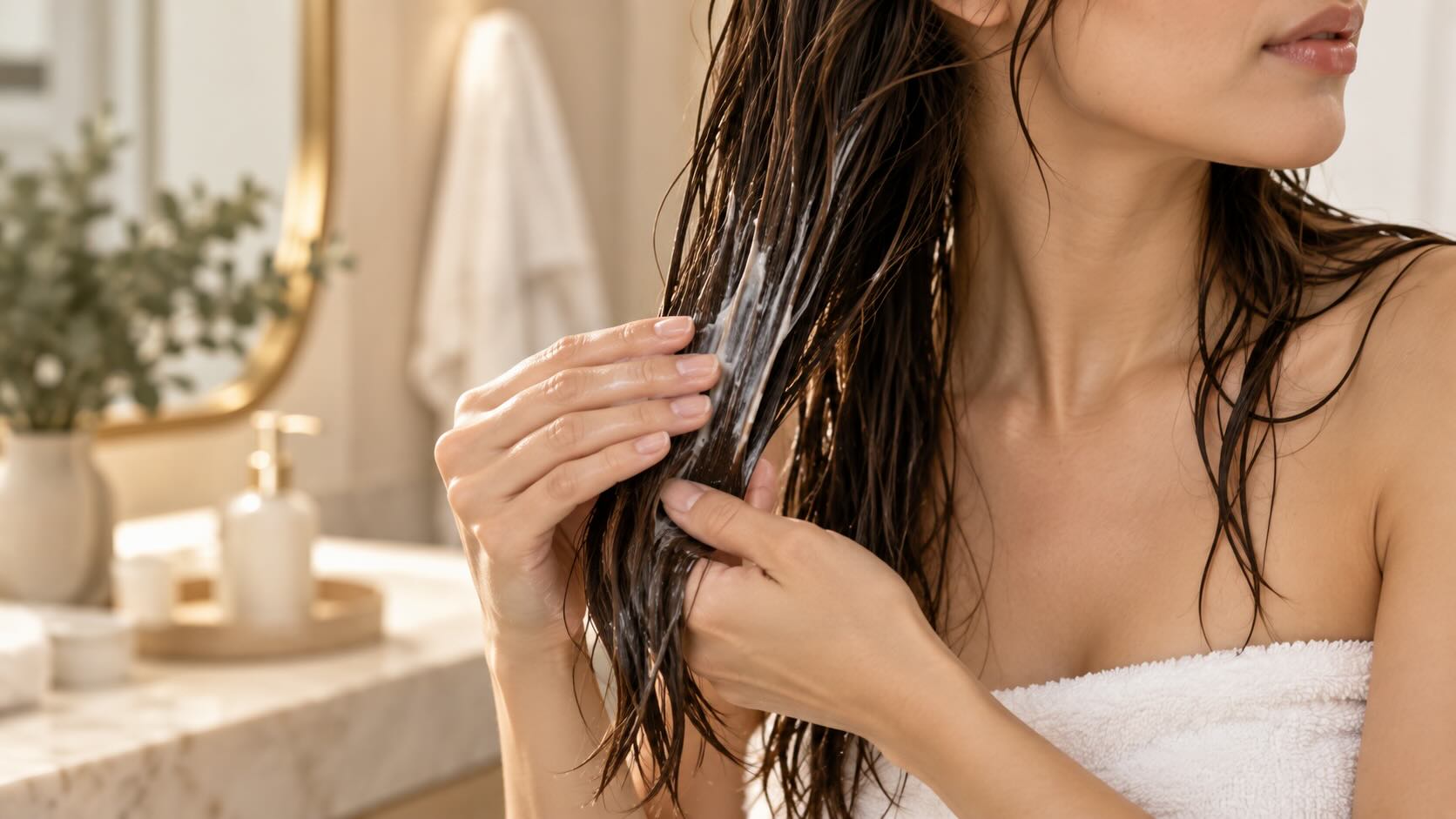
Wet hair completely, towel dry to damp. Apply Olaplex No.3 generously throughout the hair from mid-lengths to ends — the areas carrying the most UV and heat damage. Do not apply to the scalp. Comb through with a wide-tooth comb to ensure even distribution. Leave for a minimum of 10 minutes. For severe damage, leave up to 90 minutes or overnight. Rinse thoroughly, then shampoo and condition as normal. The first session often produces the most dramatic immediate result — hair feels noticeably softer and less brittle within hours of the first treatment.
Week 2: The reinforcement session
Repeat the same protocol one week later. At this session, some users reduce the application time to 10–20 minutes because the most acute bond damage from week 1 has been partially addressed. Others maintain the longer application for continued repair. The key variable is how your hair feels mid-week between session 1 and 2 — if it is already noticeably improved, 10–20 minutes is sufficient. If it still feels brittle or breaks easily when dry-brushing, the longer application time is worth maintaining.
Weeks 3–4: Consolidation and maintenance
By weeks 3 and 4, the cumulative bond repair has typically produced the majority of the visible transformation — reduced breakage, improved elasticity, noticeably more shine. The week 3 and 4 sessions consolidate the improvement and begin establishing a maintenance baseline. After the 4-week protocol, switching to once-every-two-weeks Olaplex No.3 use maintains the bond health through the fall heat-styling season.

My 4-week results
Who needs Olaplex No.3 in September
Use it if:
- Your hair feels dry, brittle, or straw-like after summer
- You are seeing increased breakage or shedding when brushing or styling
- You swam in salt water or chlorinated pools regularly this summer
- You use heat tools frequently and want to repair before increasing fall styling
- You have color-treated, bleached, or chemically processed hair — bond damage compounds fastest in these hair types
- You want to improve hair quality before the holiday season when styling frequency peaks
Skip it if:
- Your hair is genuinely in good condition — healthy hair gains minimal additional benefit from bond building
- You want a single-use deep conditioner for immediate softness — Olaplex is cumulative, not instant
Olaplex No.3 vs other treatments
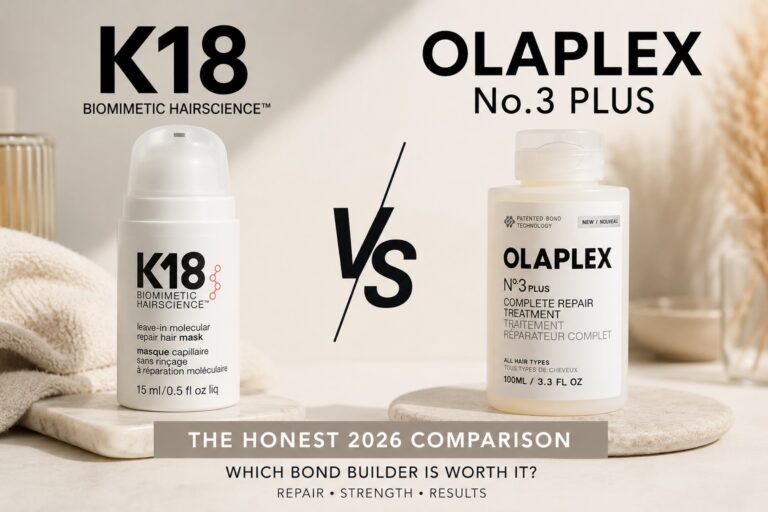
Olaplex No.3 vs K18 Leave-In Molecular Repair Mask
K18 uses a different mechanism — a bio-mimetic peptide that reconnects broken keratin chains rather than disulfide bonds. Both produce structural hair repair, but through different chemistry. K18 is applied as a leave-in treatment without rinsing, making it more convenient. Olaplex requires rinsing after the wait period. In the K18 vs Olaplex comparison already on celeblabel, both produced measurable repair — Olaplex slightly better for disulfide bond-specific damage from bleach and UV, K18 slightly better for keratin chain damage from heat. For September UV and salt/chlorine damage specifically, Olaplex No.3’s disulfide bond focus is the more targeted choice.
Olaplex No.3 vs standard protein treatments (Aphogee, etc.)
Protein treatments deposit hydrolyzed proteins onto the hair surface to temporarily fill gaps in the cuticle and increase strand thickness. They improve manageability and reduce frizz immediately. Unlike Olaplex, protein treatments do not enter the cortex or rebuild internal bonds — the improvement is surface-only and temporary. For surface smoothing and immediate texture improvement, protein treatments are effective. For structural repair of broken bonds, Olaplex is the only OTC product with the chemistry to achieve it.
Olaplex No.3 vs Olaplex No.0 Intensive Bond Building Treatment
Olaplex No.0 is a newer primer treatment applied before No.3 for amplified bond-building results — used together, they produce more repair than No.3 alone. No.0 + No.3 is the protocol used in Olaplex’s own salon system. For at-home use, starting with No.3 alone is the correct first step; adding No.0 as a primer after completing the 4-week No.3 protocol is the next escalation if further repair is needed.
FAQ
Can I use Olaplex No.3 every week?
Yes — Olaplex No.3 is designed for weekly use and has no frequency upper limit for damaged hair. During the September repair protocol, weekly is the recommended frequency. Once hair reaches a healthy baseline, biweekly maintenance is sufficient for most people. More frequent use (twice weekly) is appropriate for severely bleached, heat-damaged, or chemically processed hair.
How long should I leave Olaplex No.3 on?
The minimum is 10 minutes. For moderate damage (summer UV, occasional heat styling), 20–30 minutes produces good results. For significant damage (bleached, heavily heat-damaged, or salt/chlorine-exposed hair), 60–90 minutes or overnight provides the most comprehensive bond repair. Longer application times allow more BADD molecules to penetrate the cortex and reach more broken bond sites — there is no risk of over-treating.
Can Olaplex No.3 be used on natural, unprocessed hair?
Yes — natural hair also undergoes UV damage, mechanical stress from styling, and environmental oxidation that breaks disulfide bonds over time. Olaplex No.3 works on all hair types, though the visible improvement is most dramatic on chemically treated or heavily heat-styled hair where bond damage is most severe. For natural hair with primarily UV and physical stress damage from summer, it still produces measurable improvement in elasticity and reduced breakage.
Does Olaplex No.3 work on colored hair?
Yes — and it is particularly beneficial for color-treated hair because color processing specifically breaks disulfide bonds. Olaplex No.3 used weekly rebuilds the bonds that coloring breaks, maintaining hair integrity and extending the life of color treatments by improving the structural condition of the hair that holds the color. Many colorists recommend Olaplex No.3 as a standard maintenance protocol between color appointments.
Final verdict — Olaplex No.3 Hair Perfector: The September Hair Reset
Olaplex No.3 Hair Perfector is not a conditioner — it is the molecular repair tool for summer-damaged hair, and September is precisely when it produces its most impactful results. After four weekly sessions through the fall hair repair window, the measurable improvements in elasticity, strength, shine, and reduced breakage represent a structural transformation that no conditioning treatment can replicate. At around $30 for a 3.3oz bottle providing 8–12 weekly treatments, it is the highest-return hair investment you can make on Amazon heading into the fall styling season. Start now, and your hair will enter October genuinely restored.